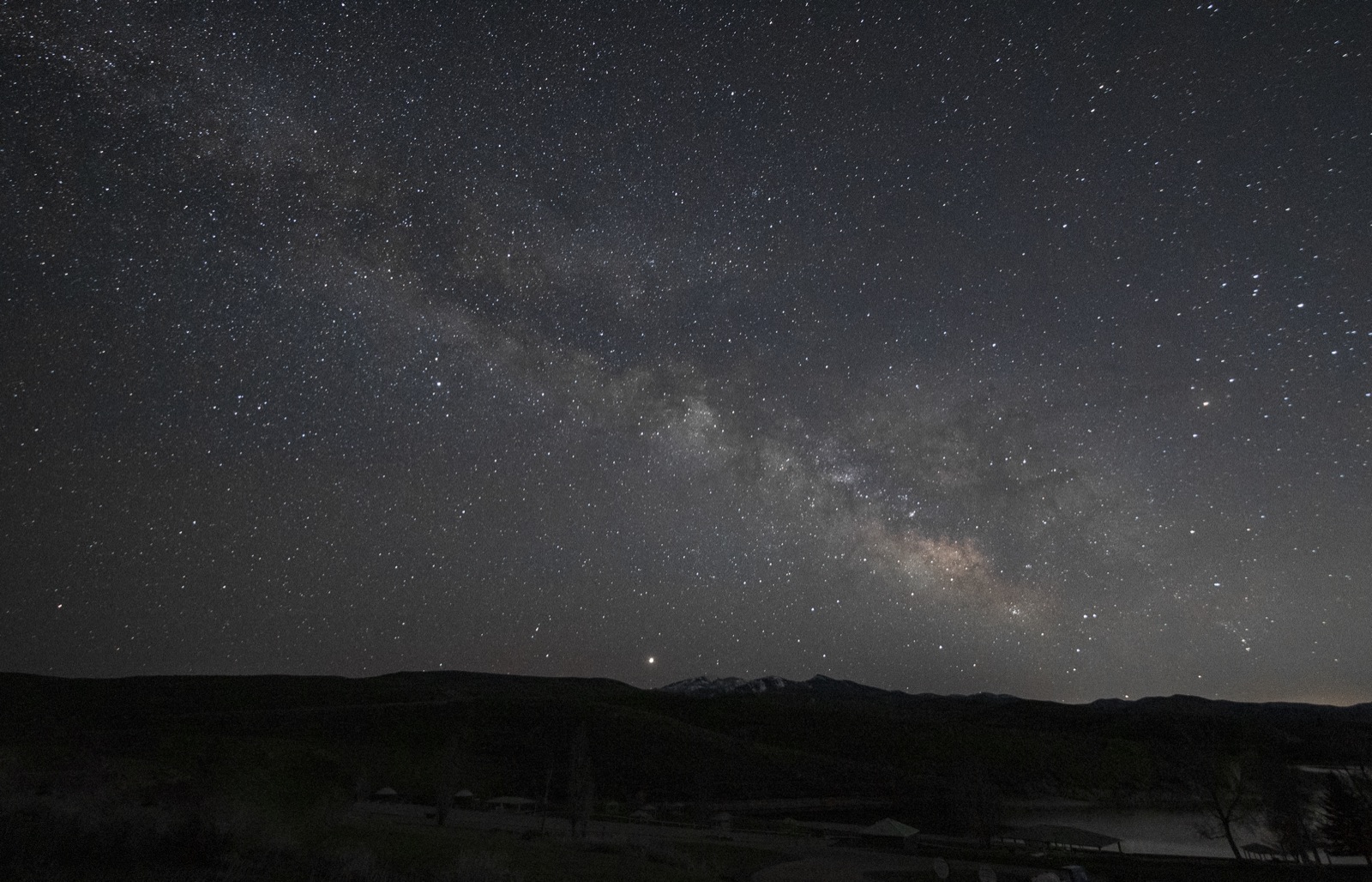
For most people driving down from Salt Lake City, the sweet spot is a new-moon weekend between May and September. That window combines warm-enough nights, the Milky Way's galactic core above the horizon after dark, and nightly guided tours in full swing. But every season at Bryce has a real case, and winter is criminally underrated. Whatever season you pick, the drive from SLC works the same way year-round.
Bryce Canyon's rim sits between 8,000 and 9,100 feet. That altitude matters for two reasons. First, you are above a meaningful chunk of the atmosphere's water vapor and haze, so stars look sharper and fainter objects survive to your eye; it is a big part of how the park reaches a limiting magnitude of about 7.4. Second, it gets cold at night in every month of the year. July afternoons in the 80s routinely fall to the 40s by midnight on the rim. Pack like it is two seasons colder than Salt Lake City; the full layering list is in what to expect on a tour.
The bright, photogenic core of the Milky Way, the part you have seen in every desert night-sky photo, is only above the horizon at convenient hours from roughly May through September in Utah. In May and June the core rises late in the evening toward the southeast; by July and August it is high in the south at full dark, prime time; by late September it sets earlier in the evening. If your goal is that arching band of light over the hoodoos, book inside this window.
One summer caveat: the North American monsoon pushes afternoon thunderstorms across southern Utah from roughly mid-July through August. The pattern usually builds clouds in the afternoon and clears after sunset, so summer stargazing still works most nights, but build a second night into your trip as insurance. It is one more argument for making this a full weekend; see where to stay near the park.
| Season | Night temps at the rim | Sky highlights | Notes |
|---|---|---|---|
| Spring (Mar-May) | 20s-30s F | Winter constellations early, core rising late by May | Unstable weather; fewer crowds |
| Summer (Jun-Aug) | 40s F | Milky Way core at its best | Monsoon afternoons mid-Jul to Aug; busiest season |
| Fall (Sep-Oct) | 20s-30s F | Core early evening, Andromeda rising | Stable air, thin crowds; a local favorite |
| Winter (Nov-Feb) | 0-20s F | Orion, Sirius, the clearest air of the year | Snow on hoodoos; brutal cold, spectacular clarity |
The Winter Case
Cold air holds far less water vapor than warm air, and the coldest nights at Bryce are often the most transparent of the entire year. Add more than 13 hours of darkness, snow-dusted hoodoos under starlight, and almost no other visitors, and winter becomes a genuinely elite stargazing trip for anyone willing to dress for single-digit temperatures. The drive requires more care above 7,500 feet, as noted in the road trip guide, but I-15 stays fast all winter.
"Cold air holds far less water vapor than warm air, and the coldest nights at Bryce are often the most transparent of the entire year."
The moon is the one variable that outranks season. A full moon at Bryce is bright enough to read by and will erase the Milky Way entirely, even in a Bortle 2 sky. Use these rules:
- New moon week is best. Aim for the few nights on either side of the new moon for maximum darkness.
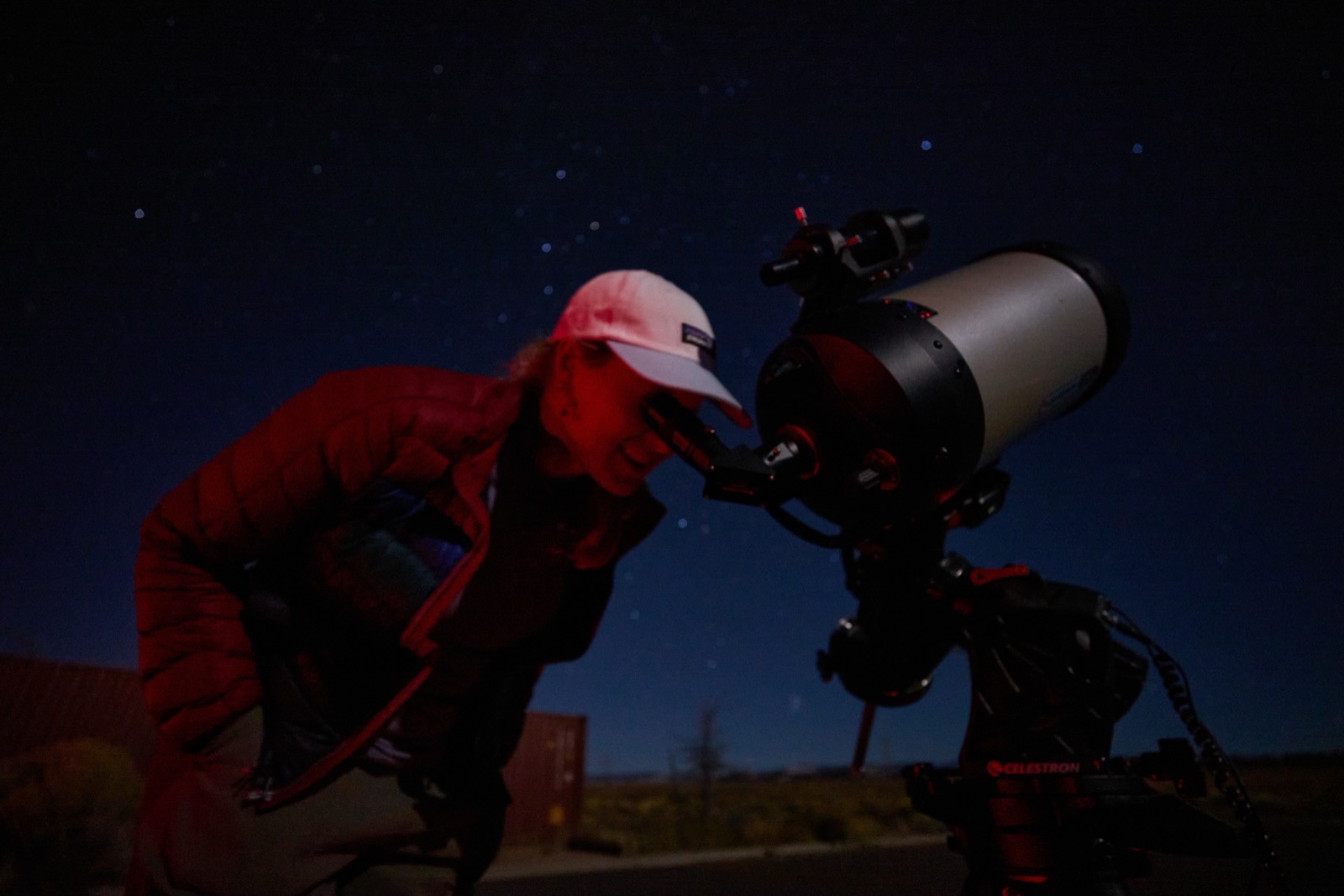
- First-quarter compromises well. The moon sets around midnight, giving you dark early-morning skies, and you get bonus telescope views of lunar craters early in the night.
- Full moon is its own trip. You lose the stars but gain moonlit hoodoos, which is a legitimately stunning landscape experience. Just know what you are signing up for.
Guided tours run on most clear nights regardless of phase, and the guides at Bryce Canyon Stargazing tailor each night to what the sky is actually offering, planets and clusters on bright nights, deep-sky objects and the Milky Way on dark ones.
Found your new-moon weekend? Lock in the tour first, then book lodging around it. Summer dark-moon weekends are the first to sell out.
Check Tour DatesThree showers reliably justify a dedicated SLC-to-Bryce run: the Perseids in mid-August (the classic, though check the moon phase that year), the Geminids in mid-December (often the year's strongest, in winter's ultra-clear air), and the Lyrids in late April. Under Bortle 2 skies you will see several times more meteors than from anywhere near the Wasatch Front, including the faint ones that never survive city glow. For how Bryce compares with closer meteor-watching spots, see the ranked comparison, and check the FAQ for month-by-month questions.